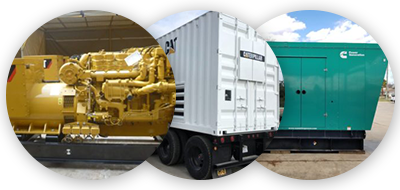
If you’ve ever seen a generator in action, the million-dollar question looming over your head might be: how generators work? How is this piece of machinery creating enough electricity to power a whole building?
To put in concisely, generators employ electromagnetic induction to produce electricity. We’ll explain this principle along with the components of a generator further in this guide.
Electric generators are a godsend in areas that face frequent power outages. Additionally, they are installed as backups to prevent any interruption in the activity of certain important equipment.
More importantly, generators are the sole providers of electricity in distant regions devoid of main electricity lines. Similarly, people working on a project site or traveling in an RV also rely on generators since they cannot access main electricity lines.
How Do Generators Work?
Before getting into detail about the working of a generator, it would be helpful to know that generators aren’t creating electricity. Instead, they’re facilitating it via electromagnetic induction – a principle first presented by Michael Faraday in the 1830s.
Think of it as a water pump. It moves water but does not create it. That’s exactly what a generator does with electricity.
Simply put, Faraday discovered and proposed that when you wrap two insulated wire coils around an iron ring and pass a current through one coil of wire, the current induces into the second wire.
The same principle is used in generators even today.
How Do Different Generator Parts Work Together?
To accomplish electromagnetic induction, different parts of a generator work together to produce electricity. Here are the three main components:
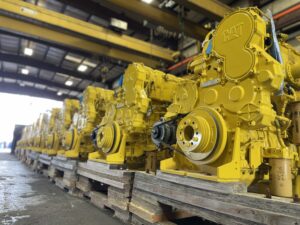
- Engine: The engine is arguably the most important and powerful component of the generator. It may run of any fuel, diesel being the most common.
- Alternator: It’s composed of two components, called the rotor and the stator. While the rotor moves, the stator remains stationary. Depending on the generator’s size, the rotor moves, producing a strong rotating magnetic field.
- Voltage Regulator: As the name indicates, the generator’s voltage is regulated by the voltage regulator.
The rotor – moving part – in an alternator can create a magnetic field in many ways, including the following:
- Brushless alternators in more powerful generators create a magnetic field by induction.
- Small generators have permanent magnets.
- Some rotors use an exciter – a DC current source that provides energy to the rotor via conducting brushes and slip rings.
The Mechanism
Now that you know about the main components, let’s discuss how they produce electricity together. The process is made up of the four following steps:
- In the first step, the voltage regulator converts some of the AC voltage into DC voltage and sends it to the alternator’s stator exciter windings.
- Then, the secondary windings of the stator follow the function of the primary winding, adding to the AC voltage being produced. The secondary windings connect to the rotating rectifiers.
- They convert AC to DC again and send the current to the rotor, creating an electromagnetic field in the rotor’s magnetic field.
- Just like the wires in Faraday’s experiment, the AC voltage is induced into the rotor from the stator’s windings, producing a higher AC voltage.
These steps keep repeating themselves until the generator’s full capacity is reached.
Components Of A Generator
In order to fully understand how generators work, you must know about their components too. Depending on the design complexity, a generator might have different parts, but the standard components remain the same.
Engine
The engine drives the generator, providing the essential mechanical energy that has to be converted into electric energy. Powerful generators have larger engines for higher energy production.
Engines run on a number of fuels, including gasoline, natural gas, propane, and most commonly diesel. Smaller engines, such as those used in RVs, run on propane, while larger and more powerful ones need diesel to operate.
Some engines also have a bi-fuel system, which means they can operate on both gas and diesel.
Alternator
As discussed earlier, the alternator has a moving and a stationary part that works in syn for the production of electrical output.
Since it caused movements between the electric and rotating magnetic field, the alternator is an essential part of the generator.
While alternators may be made of plastic or metal, the latter is widely preferred due to its durability and strength. On the other hand, plastic tends to get damaged over time, reducing the efficiency of the generator.
Likewise, a brushless alternator is considered a better pick since it provides cleaner power and requires minimal maintenance.
Fuel System
A generator’s fuel system comprises the following components: pump, ventilation pipe, connection pipe, water separator, injector, and overflow connection.
Normally, a fuel tank keeps the generator running for six to eight hours.
Although smaller generators have built-in fuel tanks, larger generators require external tanks to be erect, such as those on project sites.
Voltage Regulator
A voltage regulator converts a small portion of AC voltage into DC current and then sends it to the stator’s secondary or exciter windings. After that, the process continues as described above.
As the generator’s load increases, the output voltage goes down a bit. Sensing this, the voltage regulator sets into action and starts the cycle again, only stopping once the generator has reached its full capacity of operation.
Cooling System
During continuous use, the internal components of a generator are bound to heat up. That’s where the cooling system comes into place. Here are some commonly used cooling systems:
- Fan or a radiator on the generator
- Hydrogen
- Water
Exhaust System
Generator fumes contain toxic chemicals, such as carbon monoxide and certain hydrocarbons. They have to be maintained and properly disposed of to prevent air pollution. An exhaust system takes care of that.
Lubrication System
Friction could lower the efficiency of the moving parts in a generator. Therefore, a lubricating system is in place to keep things going smoothly.
Make sure you monitor leakages and check the lubrication oil level every eight hours.
Conclusion
While it’s true that most users couldn’t be bothered any less about how generators work, it helps to tickle your curiosity at times and learn about your daily-use equipment and machinery.
Some parts and functions might differ depending on the generator’s complexity and design, but the standard is similar to what’s discussed in this article.