When talking about generators, voltage often comes up since it’s one of the defining features of a generator. However, the voltage level standards differ across countries and regions.
For the US, the voltage classifications are covered by the National Electrical Manufacturers Association and the National Electrical Code. Generac has published the Medium Voltage On-Site Generation Overview that dictates voltage standards.
Typically, the generator voltages used in the industry are 480VAC, 4160VAC, and 13,800VAC. In case there’s a power outage, the backup generators provide energy to the industrial machinery and equipment.
Depending on the industry and the generator, the voltage may be low, medium, or high. Below, we look at the high, medium, and low voltage differences with regard to efficiency and industrial use.
Low Voltage
The term low voltage can have a couple of meanings in the industry. By standard, it refers to less than 600 volts. In industries where automation is a requirement, different voltages might come into play.
The factory might divide the use of electricity into control and supply with both doing a certain task that’s imperative for the industry’s operation.
Control
In simple words, a control system refers to any machine that utilizes a low voltage for operating equipment with high voltage. These systems mainly have a PLC or Programmable Logic Controller that gets input via the sensors and calculates the output.
After that, the information is sent out as per the design of the system.
Supply
Some industries need high or medium voltage through the electric utility. These factories have substations that lower the voltage levels to ensure the supply of electricity throughout the building.
On the other hand, some factories might need low voltage, ranging from 240VAC to 600VAC.
Medium Voltage
Medium voltage is used by larger industries that need considerable power. Such industries are also in need of backup power supplies. Therefore, they often have generators with 13,800 VAC.
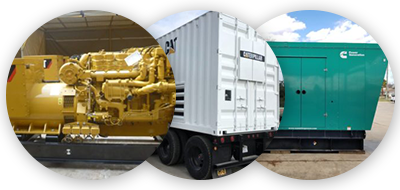
If these factories get proper backup supplies, they can continue operations even when the power is out. Such generators are also available as portable systems in sound-attenuated casings carried on a trailer.
High Voltage
High voltage is associated with transmitting power plant supplies. Since high voltage increases efficiency, it’s used for transmitting power.
With the use of high voltage, the current is lowered. As a result, power stations can use thinner cables and lower the cost of constructing electrical lines. High voltages can be anywhere from 115,000 to 230,000 VAC.
If that seems a lot, you’d be surprised to learn about ultra-high voltages that go up to 345,000 to 765,000 VAC. The system needed special distribution panels for high voltages, while the control rooms needed switching capacities.
At the moment, the highest transmission rates are up to 800,000 VAC in China. The country is in the process of developing an even higher system with 1,100,000 VAC.
High, Medium, and Low Voltage Differences
According to the ANSI standards issued as the Electrical Engineering Portal, here is how voltages are classified:
- High: These range from 115,000 VAC to 1,100,000 VAC.
- Medium: Voltage from 2,400 VAC to 69,000 VAC.
- Low: Voltage from 240 VAC to 600 VAC.
The overall document classified voltages into five sections, but they have been combined to form the categories discussed above.
Types Of Voltages
Apart from high, medium, and low voltage differences, it’s also helpful to learn about the type of voltages that are common in industries.
Rated Voltage
Rated voltage refers to the maximum voltage that a generating station can produce safely. In simple words, it’s the maximum voltage of a generator.
Nominal Voltage
Nominal Voltage is predetermined for the system. For instance, if a generator’s alternator is engineered to make 10kV, but it makes 10.2kV, 10kV will be the nominal voltage since it was predetermined.
On the other hand, 10.2kV will be the rated voltage since it’s the maximum that the generator can produce.
Extra-Low Voltage
Extra-low voltage is mostly harmless since it does not shock on touch. It’s below 70 volts, and you may only get a mild shock if you touch the wires wet.
Such a low voltage is used in medical equipment and phone chargers.
Low Voltage
Low voltage is used in household appliances and generators. It ranges from 100 volts to 600 volts. If you touch a wire with low voltage while wet, you can experience a life-threatening electric shock.
Medium Voltage
Medium voltage ranges from a thousand volts to 33kV, and it’s used in industrial power distribution and transmission lines.
High Voltage
High voltage is used in transmission towers and ranges from 33kV to 220kV.
Special Considerations For High and Ultra-High Voltage
Since high and ultra-high voltages are relatively extensive, they need special treatment. If there is any isolated equipment, they need to be earthed down.
More importantly, human access to ultra-high and high voltage areas is controlled and even limited in most cases. That’s because exposure to these wires can be lethal on the spot.
Before high voltage systems are set in action, they have to undergo probe testing. Moreover, experts need to devise special switching strategies.
How To Calculate Generator Output?
If you know the voltage of a generator, you can calculate its output. The standard formula for this is:
Watts = Volts x Amps
The unit for the final output is Watts. For instance, if you have a 5kW generator and it offers 120 volts, you will get a 41.67 A output.
Some generators also operate on dual voltages, such as 120V and 240V. You can use this information to decide which generator you need to power the whole household. Simply calculate the total power consumption to get a close estimate of the generator capacity.
Conclusion
We discussed the high, medium, and low voltage differences in this guide since it’s important to be well-informed in case you’re buying a generator for your home, office, or factory.
Keep in mind that these standards might differ across countries – although there’s not a significant difference in most regions – so it may be useful to seek professional help.